
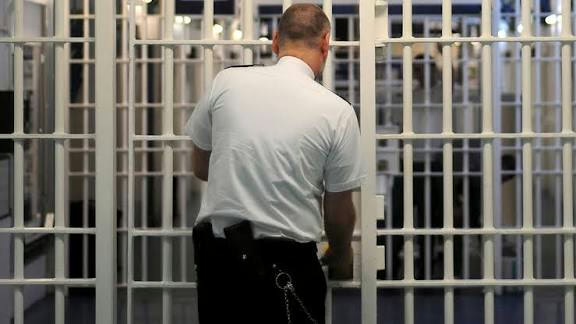
More than 2,500 foreign prison workers in the United Kingdom, the majority of them Nigerians, have been temporarily spared deportation following an emergency visa extension approved by the UK government.
The intervention comes after recent changes to visa regulations placed thousands of overseas prison staff at risk of losing their jobs and being removed from the country once their permits expired.
The policy change, introduced in July, raised the skilled worker visa salary threshold to £41,700 annually—far above the average starting salary of about £33,000 for most prison officers outside London. As a result, many foreign recruits no longer met the eligibility criteria under the revised rules.
Concerns had grown that the policy could severely disrupt the UK prison system, which relies heavily on overseas workers due to a shortage of British applicants. Public sector prisons have increasingly recruited staff from abroad, with workers from West Africa—predominantly Nigeria—forming the largest group after UK nationals.
According to report, the emergency visa extension followed lobbying by the Prisons Minister, Lord Timpson, and consultations with the Home Secretary and former Justice Secretary, Shabana Mahmood. The agreement allows affected workers to remain in the UK for an additional 12 months.
It is estimated that about 2,500 prison staff, many of whom work in front-facing officer roles, will benefit from the temporary reprieve. The exemption also applies to their dependants already living in the UK.
While Mahmood had reportedly been hesitant to approve exemptions as part of efforts to reduce net migration, the extension is expected to provide immediate relief to the overstretched prison service.
Welcoming the development, the Prison Officers Association said affected staff could now continue their work “without the threat of removal from the country,” adding that similar protections should be extended to all overseas workers who contribute to society.
The Governors Association also welcomed the decision but raised concerns about its long-term sustainability, warning that uncertainty could undermine workforce stability. The group urged the government to consider permanent employment arrangements for the affected staff after the extension expires.
Earlier, the Chief Inspector of Prisons, Charlie Taylor, had warned that failure to resolve the visa issue would have a “devastating effect” on the prison system, already grappling with rising violence against staff and operational pressures.
Responding to the decision, a government spokesperson said net migration had fallen significantly but stressed that public safety remained paramount.
“Public safety is the first duty of any government, and we must ensure prisons continue to operate safely with the right level of experienced staff,” the spokesperson said.









Leave a Reply