
By George Omagbemi Sylvester
The Southern African Development Community (SADC) has declared an all-hands-on-deck response to one of the most devastating natural disasters in recent memory as catastrophic floods ravage Mozambique, stretching regional emergency capacities and exposing deep vulnerabilities in disaster preparedness. What began as heavy seasonal rains has burgeoned into a humanitarian catastrophe spanning provinces and communities with hundreds of thousands displaced, critical infrastructure destroyed and regional solidarity tested to its limits.
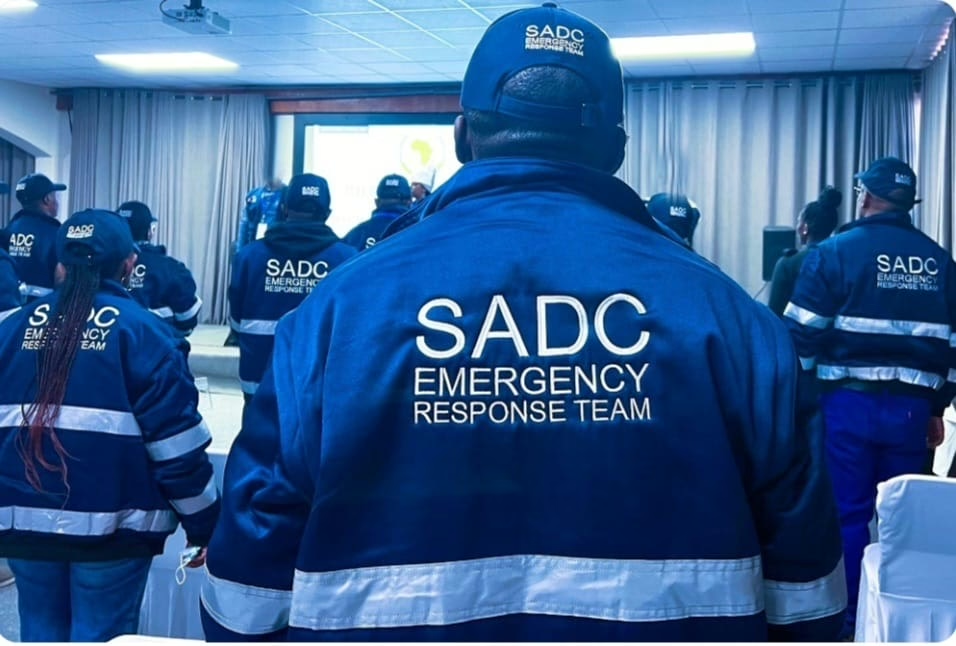
At the heart of this watershed moment is the Southern African bloc’s emergency mobilisation. The SADC Emergency Response Team (ERT) has been deployed to Mozambique to coordinate with national authorities, humanitarian partners, and international agencies in a race against time to save lives and deliver vital services. This deployment (comprising logistics, search and rescue, public health and disaster coordination specialists) underscores the gravity of the crisis.
Yet the unfolding disaster also lays bare a stark reality: Southern Africa remains perilously underprepared for the scale and frequency of climate-driven disasters now sweeping the region.
Unprecedented Flooding and Human Toll.
Since early January, Mozambique has faced torrential rains that have swollen rivers, breached dams, and submerged vast tracts of land across multiple provinces. The Gaza region alone has seen entire towns turned into lakes, with roads, schools and health facilities rendered inaccessible.
The United Nations Children’s Fund (UNICEF) reports that hundreds of thousands of people have been affected, with children comprising a major portion of those displaced. Many families have lost homes, livelihoods and access to essential services, underscoring a humanitarian crisis of staggering proportions.
The scale of displacement and damage is reminiscent of past calamities in the region, including Cyclone Idai, which wrought immense destruction across Mozambique and surrounding states several years ago. As the United Nations Office for Disaster Risk Reduction has observed, the geography and climate patterns of Mozambique make it especially susceptible to such disasters, which sometimes what trends that climate scientists warn will intensify with global warming.
SADC’s Coordinated Emergency Response: Solidarity in Action.
In response, SADC has activated its humanitarian mechanisms, integrating the ERT into Mozambique’s national disaster coordination system. The goal: facilitate life-saving assistance, strengthen early recovery efforts and coordinate donor support while ensuring humanitarian principles are upheld.
“This is not just a national emergency, but it is a regional crisis that demands collective action,” said a senior SADC official, highlighting the interconnected nature of weather, infrastructure and human security across borders. Such a stance reflects the understanding that disasters, especially in a warming world, do not respect borders and neither should the response.
Partners including the United Nations Office for the Coordination of Humanitarian Affairs (OCHA), the International Federation of Red Cross and Red Crescent Societies (IFRC), and national disaster management authorities are working alongside SADC to scale up relief operations.
Regional Solidarity in Practice: Search and Rescue, Air Support and Community Protection.
The crisis has elicited a broad mobilisation of resources well beyond Mozambique’s borders. South African National Defence Force (SANDF) aircraft (including rotary wing assets) have conducted air rescue operations to evacuate stranded communities, bringing vulnerable people to safety amid rapidly rising water levels. Reports indicate hundreds of individuals have already been airlifted to secure locations as part of Operation CHARIOT, the national defence force’s relief effort.
Alongside state actors, specialised civil rescue teams from within the region have deployed to provide expert support in swift water and aviation rescue missions. These multidisciplinary teams bring technical skills crucial for navigating dynamic flood environments and from aerial evacuations to ground logistics coordination.
International humanitarian organisations such as Save the Children are also active on the ground, assisting with relocation and the provision of emergency supplies. Their reports paint a harrowing portrait of families stranded, children at risk of disease outbreaks and critical access routes cut off by water.
Lessons in Leadership and Shared Vulnerability.
The magnitude of the emergency has impelled leaders across Southern Africa to pivot resources and public attention toward disaster response. Yet it also confronts regional policymakers with uncomfortable truths about preparedness and resilience.
As SADC deepens its coordination efforts in Mozambique, scholars of disaster risk management point to systemic shortcomings that must be addressed if such catastrophes are to be mitigated effectively in the future. Dr. Elaine Jamieson, a respected expert in climate adaptation, argues that “reactive response mechanisms, while essential, are no substitute for robust early warning systems and sustainable infrastructure that anticipate, rather than simply react to, climatic extremes.”
Such insights resonate with historical precedents. Past events, like the notorious Cyclone Idai, revealed similar deficiencies in early warning dissemination, community preparedness and regional logistical cooperation. Those failures contributed to significant loss of life and economic disruption, leading many analysts to call for deeper structural reforms within SADC’s disaster response architecture.
Structural Deficits and Calls for Transformation.
There exists a growing consensus among disaster risk researchers that Southern Africa must evolve from ad-hoc mobilisations to institutionalised, well-funded regional resilience frameworks. This entails (foremost) strengthening early warning and climate forecasting systems that provide vulnerable populations with life-saving lead time before disaster strikes.
Professor Thabiso Mbeki, an academic in environmental governance, asserts: “The climate crisis demands anticipatory governance. It is not enough to rescue; we must predict, prepare and protect.” This means investing in infrastructure that can endure extreme weather, expanding cross-border emergency medical logistics and cultivating community-level readiness programs.
Failing to do so leaves populations in harm’s way and places disproportionate burdens on national budgets already grappling with economic constraints.
Human Cost Beyond Headlines.
Behind every statistic lies human suffering. Entire communities have been cut off, families forced into temporary shelters and the fabric of daily life torn apart by rising waters. Schools and health centres (essential pillars of social stability) have been damaged, magnifying the long-term consequences of this disaster on education, public health and economic activity.
As a collective, Southern Africa now faces a reckoning. The flood in Mozambique is not an isolated event but part of a global pattern of climate disruptions that demand urgent policy attention. The SADC response (while commendable) must evolve beyond emergency relief to proactive planning that protects lives, preserves livelihoods and builds a future where such disasters no longer blindside entire nations.
A Defining Moment: Strength Through Unity and Action.
In the face of overwhelming adversity, SADC’s mobilisation alongside national forces and humanitarian partners represents a powerful testament to regional solidarity. Yet the urgent challenge now is to transform this solidarity into enduring resilience.
As the floodwaters recede (and, inevitably, as they swallow landscapes again in future crises) the people of Southern Africa must insist on more than goodwill. They must demand foresight, investment and leadership commensurate with the existential threats of our age.
In the words of Betty Williams, Nobel Peace Prize laureate: “Peace is not just the absence of conflict, but the presence of justice, resilience and shared humanity.” This moment demands exactly that: a flood response that not only saves lives today but charts a course toward a safer, more resilient tomorrow.







Leave a Reply