
By George Omagbemi Sylvester
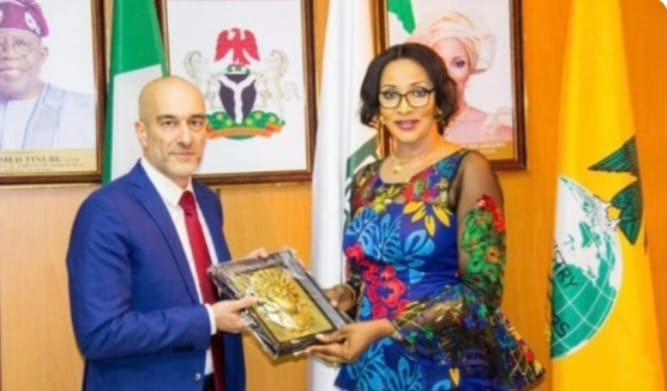
In a decisive and forward-looking diplomatic engagement, the Federal Republic of Nigeria has declared its unwavering commitment to deepening its bilateral relations with the Italian Republic, a relationship that has spanned more than six decades and continues to gain fresh momentum in the contemporary era. This renewed pledge comes against the backdrop of a courtesy visit by the Italian Ambassador to Nigeria, His Excellency Roberto Mengoni, to the Minister of State for Foreign Affairs, Ambassador Bianca Odumegwu-Ojukwu, in Abuja. Their discussions have resonated with the gravity of an era where global challenges demand collaborative solutions and where bilateral cooperation must transcend ceremonial ritual to produce tangible socioeconomic benefits.
At the heart of these engagements is a clear recognition: Nigeria and Italy share not only a history of formal diplomatic ties established shortly after Nigeria’s independence, but also a future rich with prospects for mutual growth in trade, sustainable development, security, cultural integration and human capital development. What was once a traditional post-colonial diplomacy is now evolving into a strategic partnership modeled on mutual interests, equity and shared aspiration.
A Relationship Rooted in History and Renewed in Purpose.
Nigeria and Italy have enjoyed diplomatic relations for over sixty years. Over this period, their engagements have touched multiple spheres of cooperation, from trade and culture to education and security. Yet, despite the longevity of this relationship, Nigeria has never established a formal bi-national commission with Italy, a designated institutional framework that many analysts argue would elevate and structure collaboration in ways that overcome ad-hoc arrangements and siloed interactions. Ambassador Odumegwu-Ojukwu’s advocacy for such a commission is not merely procedural; it signals a desire for structural partnership capable of addressing 21st-century challenges.
Recognised international relations expert Professor Eghosa Osaghae once observed that sustainable bilateral cooperation cannot be left to the vagaries of ad-hoc diplomacy; it requires institutional mechanisms that support continuity beyond political cycles and individual leadership tenures. This underscores the strategic importance of establishing formal mechanisms to deepen Nigeria-Italy relations.
Shared Priorities in a Complex Global Landscape. Today’s global order is beset with intertwined challenges, from climate change and food insecurity to irregular migration and transnational crime. In their dialogue, Nigerian and Italian officials emphasised the shared imperative of confronting these issues collaboratively. Nigeria, with its vast population and dynamic economy, and Italy, a key strategic partner within the European Union, recognise that global challenges require cooperative responses rooted in mutual respect and shared values.
In the words of former United Nations Secretary-General Kofi Annan: “We live in a world of complex interdependence, where no country (large or small) can confront its most pressing challenges alone.” This sentiment resonates in the ongoing Nigeria-Italy engagements, which extend beyond diplomatic niceties to address real-world problems affecting ordinary citizens on both sides.
From Sustainable Development to Economic Transformation. One of the key pillars of the renewed partnership is economic cooperation. Both countries have identified sectors where collaboration can drive sustainable development and industrial transformation. Italy has long provided technical support for Nigeria’s industrialisation efforts, particularly in renewable energy, agribusiness and infrastructure with areas that are critical to Nigeria’s economic diversification and job creation.
According to data from the Nigerian Institute of International Affairs, bilateral trade between Nigeria and Italy amounts to billions of dollars annually. Yet this volume only scratches the surface of what is possible. With Nigeria’s vast natural resources and growing consumer market and Italy’s prowess in manufacturing, design and advanced technology, the potential for trade expansion is immense. Experts advocate diversifying Nigeria’s export profile to include value-added products, while Italy can further contribute machinery and technical expertise that support Nigeria’s industrialisation goals.
Professor Amina J. Mohammed, former Nigerian Minister of Environment and current Deputy Secretary-General of the United Nations, has championed the idea that economic cooperation should be reimagined through partnerships that prioritise technology transfer, human capital development and sustainable industrialisation. This philosophy aligns directly with the emerging Nigeria-Italy cooperation agenda.
Trade Facilitation, Visa Reforms, and Mobility. A crucial element of the evolving partnership is the recognition that ease of mobility catalyses economic cooperation, educational exchange, cultural dialogue and investment flows. The Nigerian government emphasises the need for efficient visa issuance processes and improved mobility frameworks that reduce bureaucratic delays and encourage increased cross-border movement.
Revival of the Bilateral Air Services Agreement (BASA) between Nigeria and Italy has been a recurrent subject in diplomatic conversations. Restoring direct air travel services not only enhances business accessibility but also strengthens people-to-people connections, an indispensable foundation for robust bilateral relations.
Migration: From Challenge to Opportunity. Migration remains a central theme in Nigeria-Italy relations, marked by complex human dynamics and shared responsibilities. Irregular migration (particularly across the Mediterranean) has often captured headlines for its perilous journeys and humanitarian concerns. Both governments are working to shift the narrative from crisis management to partnership in harnessing migration as a pathway for legal opportunities and skills development.
Initiatives such as vocational training and small business development in high-migration areas reflect a pragmatic approach that seeks to address root causes (poverty, unemployment and lack of opportunity) rather than merely treating the symptoms. Ambassador Odumegwu-Ojukwu noted that creating prospects within Nigeria would reduce migration pressures and empower citizens to thrive at home.
As renowned migration scholar Dr. Hein de Haas asserts: “Migration is not a problem to be solved; it is a human reality to be managed through policies that protect rights, expand opportunities and strengthen economies.” This perspective is essential in reframing Nigeria-Italy cooperation around humane and mutually beneficial migration policies.
Security and Regional Stability. Beyond economic and social dimensions, Nigeria and Italy have committed to tackling transnational security threats. Illegal migration often intersects with human trafficking and organised crime networks. Both nations are enhancing joint efforts to dismantle these criminal structures, protect vulnerable populations and ensure regional stability.
These efforts align with broader regional initiatives and reflect a shared understanding that global security is indivisible, what threatens one nation can undermine the stability of another. Italy’s engagement in collaborative security frameworks and Nigeria’s leadership in West African security make this cooperation both necessary and strategic.
Cultural Diplomacy and People-to-People Connections. While economic, security and policy cooperation are essential, the cultural dimension of Nigeria-Italy relations cannot be understated. Nigeria’s vibrant cultural landscape (art, music, film and fashion) finds a receptive audience in Italy. Similarly, Italy’s rich heritage and cultural legacy resonate with Nigerians who study, work and travel between the two countries.
This cultural exchange strengthens mutual understanding and fosters goodwill, which in turn supports deeper parliamentary, business and community engagements.
Toward a Shared Future: A Partnership for the Future. As Nigeria and Italy embark on this renewed chapter of their bilateral relationship, both nations stand at the threshold of transformative cooperation. Their shared history, renewed sense of purpose and commitment to addressing global and regional challenges collectively set the stage for an enduring partnership that benefits citizens, economies and institutions alike.
In a world increasingly defined by interconnected crises and shared opportunities, the Nigeria-Italy relationship is a testament to the enduring value of diplomacy driven by mutual respect, strategic collaboration and a shared vision for prosperity and peace.







Leave a Reply