
By George Omagbemi Sylvester
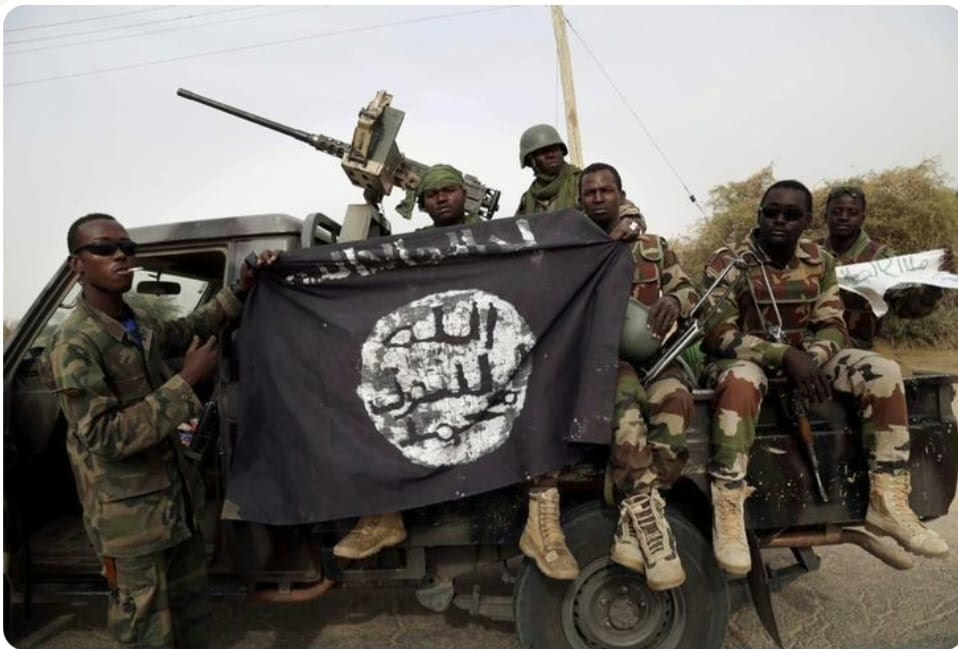
In a stark and brutal reminder of the persistent insecurity that plagues Africa’s most populous nation, suspected Boko Haram militants launched a devastating attack on Nigerian military forces in Borno State, killing several soldiers and capturing others in a single, horrific sweep. The ambush brings into sharp relief not just the raw violence of insurgency, but the profound crisis facing Nigeria’s security strategy, political leadership and the region’s fragile social fabric.
At midday on January 26th, in the parched and sprawling terrains of northeastern Nigeria, suspected members of the jihadist group Boko Haram concealed their presence and struck with sudden ferocity against a routine patrol of Nigerian troops. According to multiple security sources, seven soldiers lost their lives and thirteen others (including their commanding officer) were taken captive by the attackers.
This was not an isolated clash at the edge of a battlefield. It was, by every measure, a strategic defeat for the state and a demoralizing humiliation that underscores the failure of Nigeria’s counter-insurgency approach. No longer an occasional headline, Boko Haram’s resurgence has become a stark indictment of decades-long policy paralysis and tactical opportunism.
The Anatomy of a Strategic Collapse. Boko Haram’s origins trace back to a localized rebellion against Western-style education in Nigeria’s northeast in the mid-2000s. From modest beginnings, the group evolved into one of the deadliest insurgencies in Africa, fueled by warped ideology, criminal opportunism and regional marginalization. While military operations have weakened the group at times, it has never been decisively defeated.
The latest ambush in Borno fits a grim pattern. Using guerrilla tactics, improvised ambushes and superior knowledge of the terrain, Boko Haram elements have repeatedly turned Nigerian vulnerabilities into strategic advantages. In this recent attack, the militants not only outgunned regular troops but captured their commanding officer, a symbolic and operational blow to military morale and state legitimacy.
A seasoned military analyst puts the situation into perspective: “An insurgency exploits weaknesses not just in weaponry, but in intelligence, coordination, and state resolve. Nigeria’s forces are brave, but they are still fighting yesterday’s battles with yesterday’s doctrines in an insurgency that has advanced into tomorrow’s complexity.”
Beyond the Battlefield: Societal Fragmentation. The continued violence is not merely a security failure; it is a national trauma. Boko Haram’s rise has ripped through the social and economic fabric of northeastern Nigeria, leading to widespread displacement, economic collapse in rural areas and profound psychological scars on communities. The United Nations and independent researchers have long documented the insurgency’s effects on human security, from political instability and economic stagnation to shattered communities and pervasive fear.
In places like Borno, Yobe and Adamawa states, entire villages were depopulated for years as families fled from repeated assaults. Schools became targets rather than sanctuaries, marketplaces turned into fields of carnage and community leaders were forced into hiding. Even when towns were nominally “cleared” by government forces, the insurgents adapted, returning to strike again.
Experts Weigh In: What This Means for Nigeria. Security scholars and regional specialists argue that the Nigerian state’s approach has remained overly militarized and insufficiently holistic.
Professor Adeniyi Olugbenga, a leading expert on West African security at a major university, observes:
“Counter-insurgency is as much about governance and social inclusion as it is about firepower. Without addressing underlying grievances (economic exclusion, lack of access to education, political disenfranchisement) any military gains are temporary. Insurgency thrives where state presence is weakest.”
This assessment echoes decades of research, including studies that link Boko Haram’s endurance to broader socio-economic failings in northern Nigeria. Analysts point to persistent poverty, youth unemployment and institutional mistrust as fertile ground for extremist recruitment when left unaddressed.
A senior diplomat who has worked on Sahel interventions adds:
“Violence in Nigeria’s northeast has lost the world’s sustained attention, but it remains one of the most complex insurgencies globally. The state must reimagine its strategy beyond territorial control to community resilience and trust-building.”
Political Ramifications at Home and Abroad. The implications of this ambush ripple far beyond the borders of Borno State. Nigeria’s domestic politics have been shaped in recent years by debates over national security, federal governance and military accountability. For years, citizens and civil society groups have demanded transparency and efficacy from Abuja’s security chiefs.
Internationally, Nigeria’s inability to secure its own soil undermines its role as a regional leader. The Multinational Joint Task Force (a coalition involving Nigeria, Niger, Chad and Cameroon) was once celebrated as a model of collective response. Yet coordination challenges and shifting political priorities have undercut the force’s unity.
A senior policy expert on African security issues notes: “Regional security cooperation is essential, but it also requires sustained political will. When nations prioritize short-term interests over long-term shared strategy, insurgencies exploit the gaps.”
Hope Amid Crisis: What Must Change. Despite the grim landscape, there are lessons and opportunities for recalibration. Military reform must be paired with governance reform. Intelligence sharing and technological upgrades are essential, but so too are investments in education, economic opportunity and community policing.
Civil society voices urge an approach that empowers local communities. Women’s groups, youth networks and faith leaders can be pivotal in countering extremism when the state provides support rather than neglect. Investments in early warning systems, social reintegration for former fighters and crisis response infrastructure are not luxuries but they are necessities.
An Unfinished Chapter: A Reckoning for the State. The January attack that left soldiers dead and others in captivity is more than a tragic headline. It is a warning signal and a call for deep introspection by Nigeria’s military, leadership and society at large. The insurgency in the northeast is a symptom of deeper fractures. Unless Nigeria confronts both the roots and the manifestations of this crisis in unison, the cycle of violence will continue unbroken.
As Professor Olugbenga rightly affirms:
“Security without justice is a fleeting illusion; true peace demands both strength and sincerity from the state.”
Nigeria stands at a crossroads. Its next steps will determine not just the fate of the northeast, but the soul of a nation that has yearned for peace and stability for far too long.








Leave a Reply