
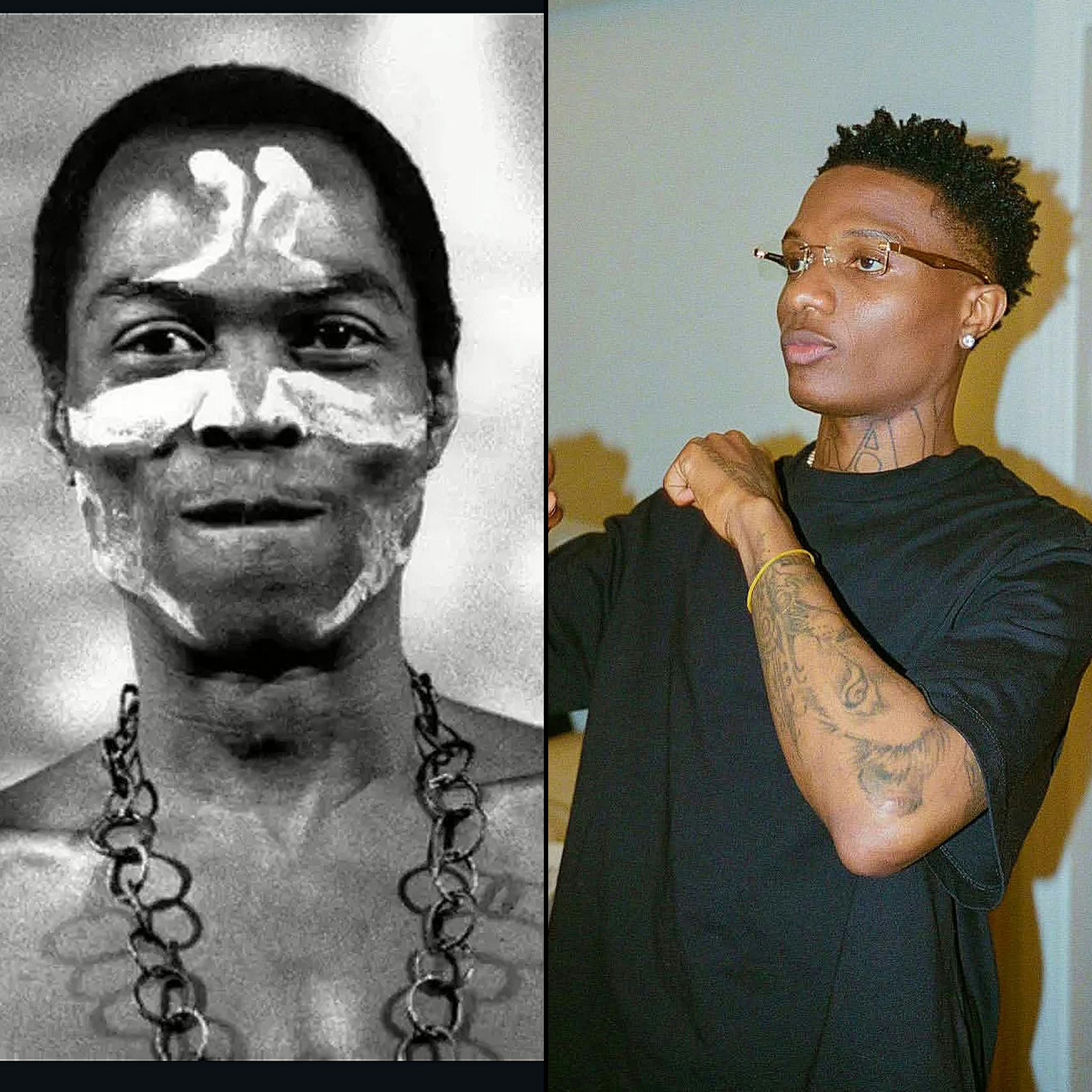
An open letter addressing Wizkid has ignited fiery discussions across Nigerian social media, particularly amid a week-long controversy entangling fans of the Grammy-winning artist and Seun Kuti, son of the legendary Afrobeat pioneer Fela Aníkúlápó Kuti.
The letter, penned by Queen Lemmy Williams, critiques the ongoing comparisons between Wizkid and Fela, notably following a fan’s suggestion that Wizkid ought to change his nickname, “Big Bird,” which overlaps with Fela’s storied legacy.
In the letter, Williams articulates the significance of Fela’s contributions to music and activism, stating, “With all due respect, this is not the era where anyone, not even you, will open their mouth and speak loosely about Fela Anikulapo Kuti, the man whose music wasn’t just rhythm but revolution.”
Here, Williams emphasises that Fela’s artistry transcended mere entertainment; it was a powerful tool for social change, addressing oppression and injustice through his revolutionary sound.
Williams elaborates further, insisting on the importance of respecting Fela’s monumental legacy: “The man bled for this continent through music. While you’re out here giving silent treatments and ‘low vibration’ lyrics, Fela gave us consciousness, courage, and a cause.” This statement underlines the distinction between the two artists:
Starnews NG gathered that the online uproar intensified when Seun Kuti called out the members of Wizkid FC, who downplayed Fela’s contributions in debates about the two artists.
Seun voiced his frustration over how frequently his father’s name is invoked in these discussions, urging fans to cease associating Wizkid with Fela, the cultural icon and activist whose influence on music and society remains unparalleled.
In light of this ongoing debate, Williams’ letter has become a critical call for recognition of Fela Kuti’s exceptional legacy, positioning it against what he sees as unjust comparisons. As Williams asserts, “Fela can only be compared with Nelson Mandela, Malcolm X, or the true giants of liberation, not artistes who spend their days trading subtweets and feeding toxic fanbases.”
This unfolding narrative encapsulates the complexities of honouring a true icon like Fela while navigating the contemporary music landscape, pivoting the conversation towards the need for respect and understanding of the influences that shape Nigerian music today.
Starnews NG reports that Fela, was a formidable freedom fighter dedicated to socio-political activism, which informed his music. He is widely recognised as the founder of Afrobeat, blending traditional Yoruba rhythms, jazz, funk, and highlife to create a politically charged musical genre that continues to inspire generations of artists globally.
On the other hand, Ayodeji Ibrahim Balogun, popularly known as Wizkid has carved a niche for himself in the music industry as a singer-songwriter and record producer, whose fusion of Afrobeats, hip-hop, and R&B led to his international acclaim, culminating in a GRAMMY Award for his collaboration with Beyoncé on “Brown Skin Girl” in 2021.
Wizkid operates in a digital age, where social media, streaming platforms, and instant communication play a significant role in shaping his career and connecting with fans. This environment allows artists to reach a global audience quickly and engage directly with their supporters.
In contrast, Fela Aníkúlápó Kuti operated in an era dominated by analogue technology, where music distribution relied on physical formats like vinyl and cassette tapes, and interactions with fans were primarily through live performances and media appearances.
The differences in these generations highlight how the landscape of the music industry has evolved. Fela’s impact as a pioneering artist was monumental in his time, using his music to provoke thought and inspire change in a less connected world. Conversely, Wizkid leverages the immediacy and reach of digital platforms to cultivate a fanbase and promote his music, reflecting the contemporary focus on accessibility and globalisation in the music scene.
These contrasting environments not only shaped their music styles and distribution methods but also influenced how they engage with societal issues and their respective audiences.
As discussions continue to evolve, both Wizkid and his supporters are encouraged to reflect on the weight of their words and the historical significance of Fela Aníkúlápó Kuti, ensuring that his legacy as a transformational figure in African music and activism is preserved and respected across generations.








Leave a Reply